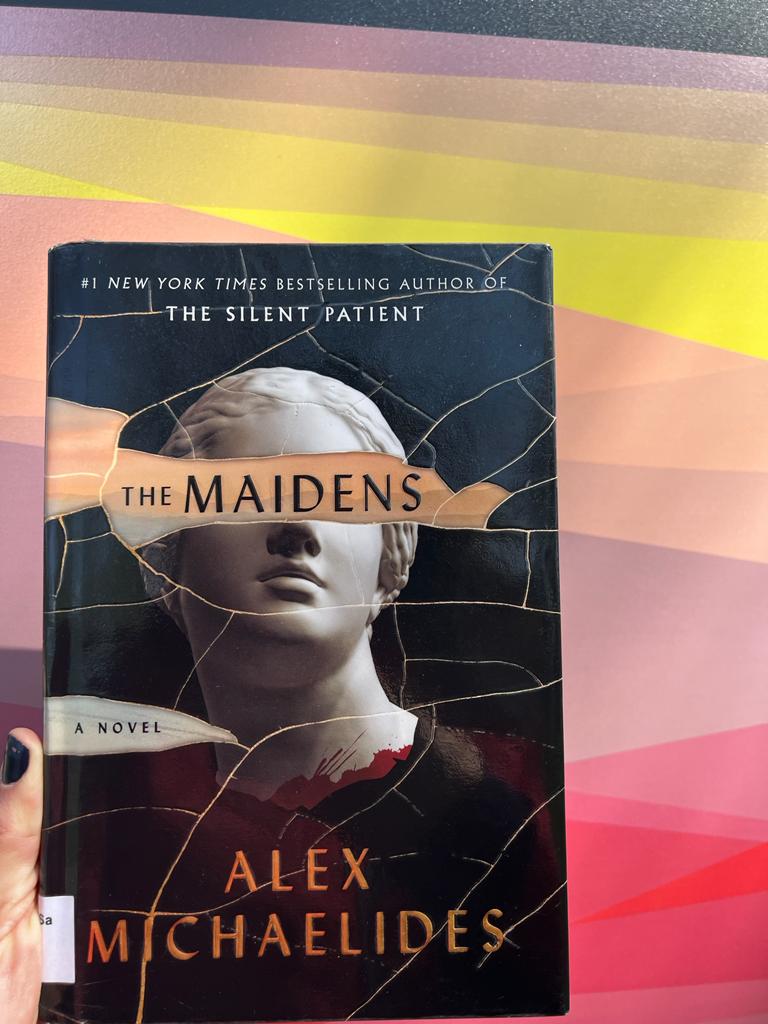
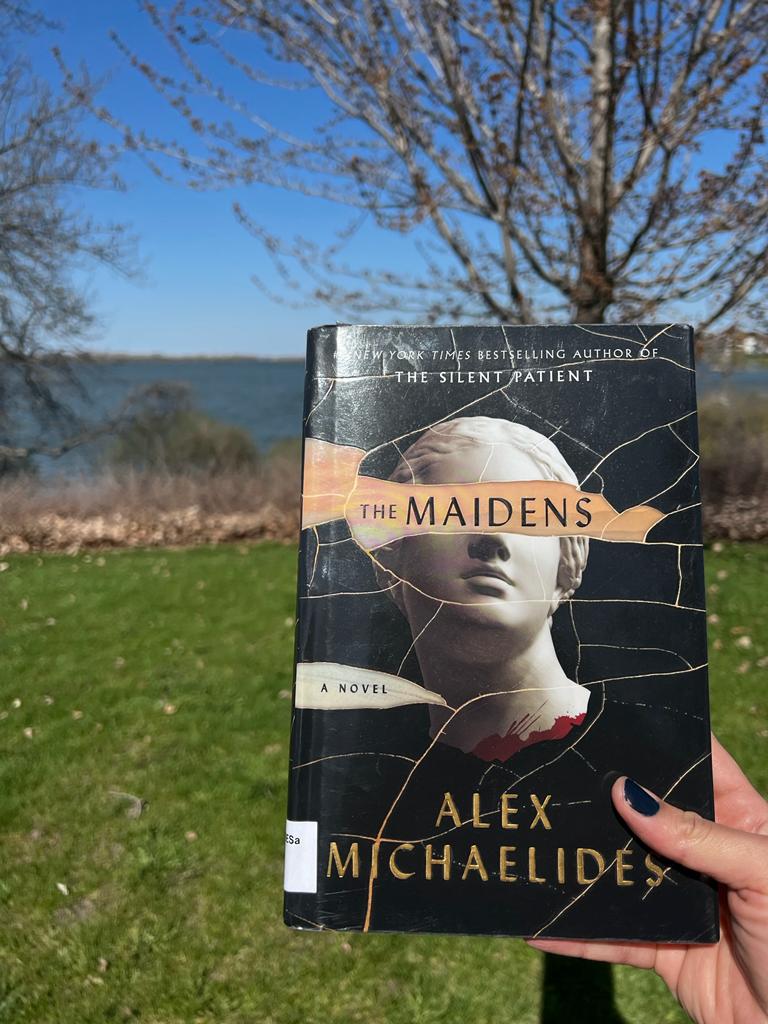
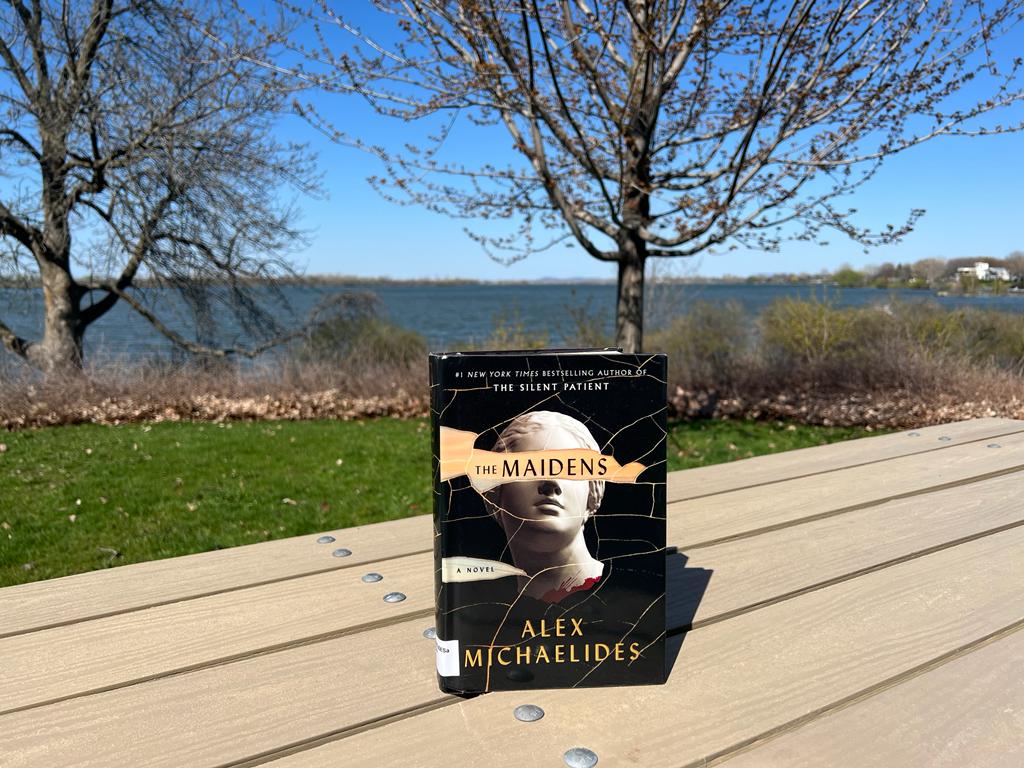
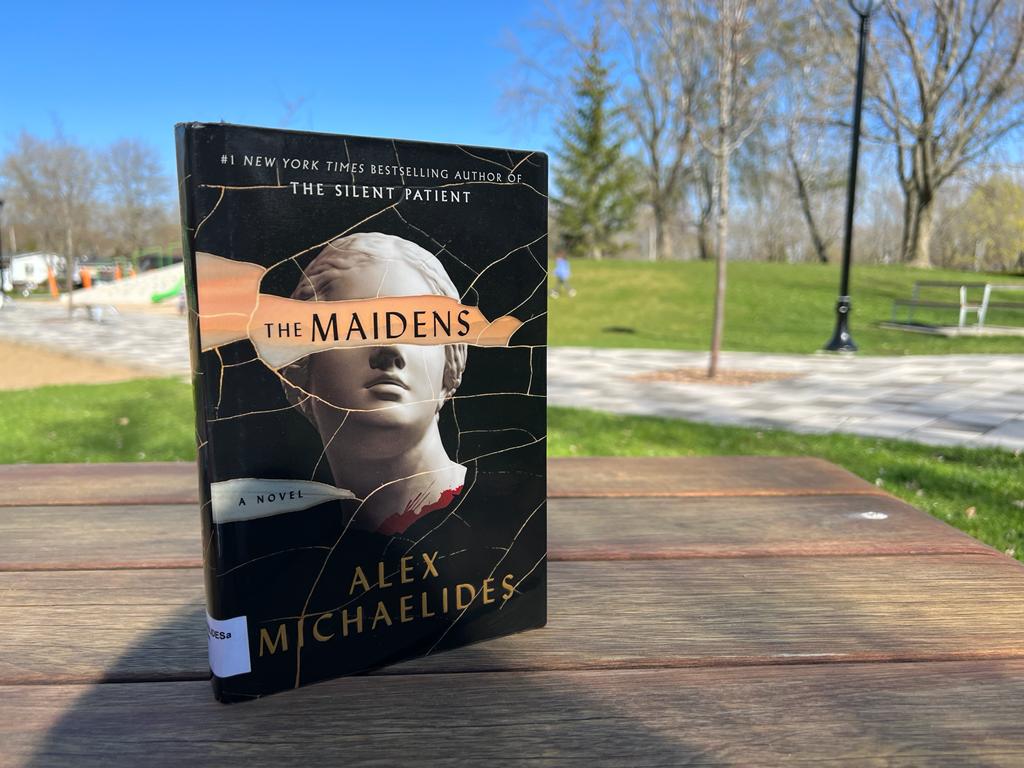
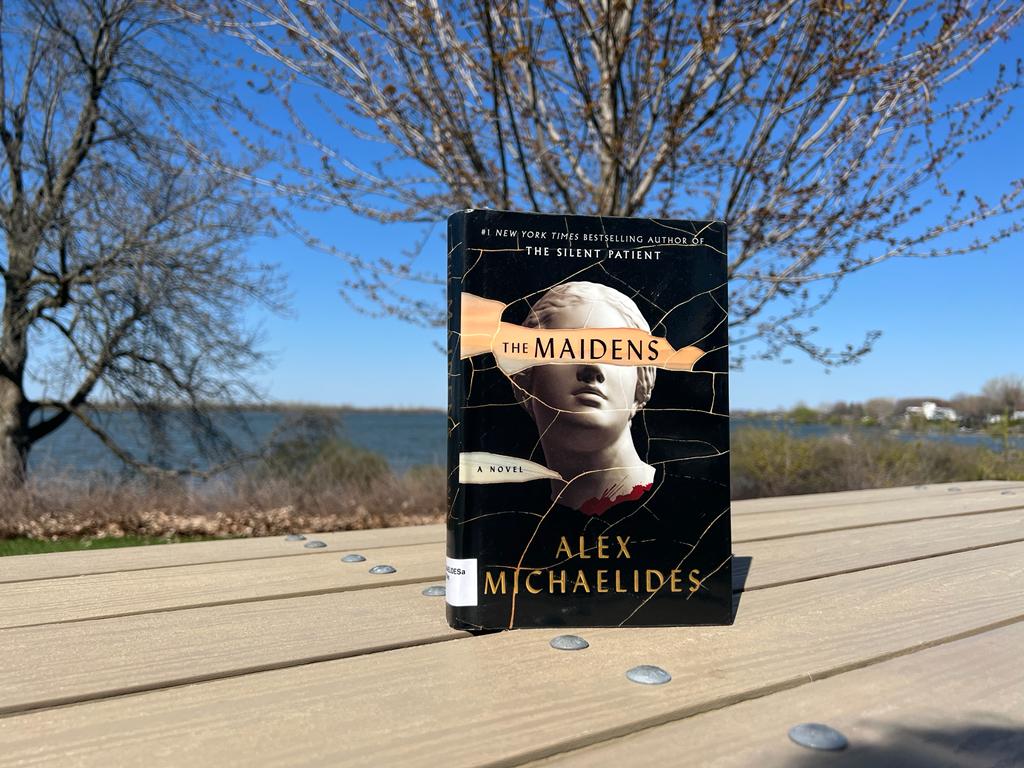
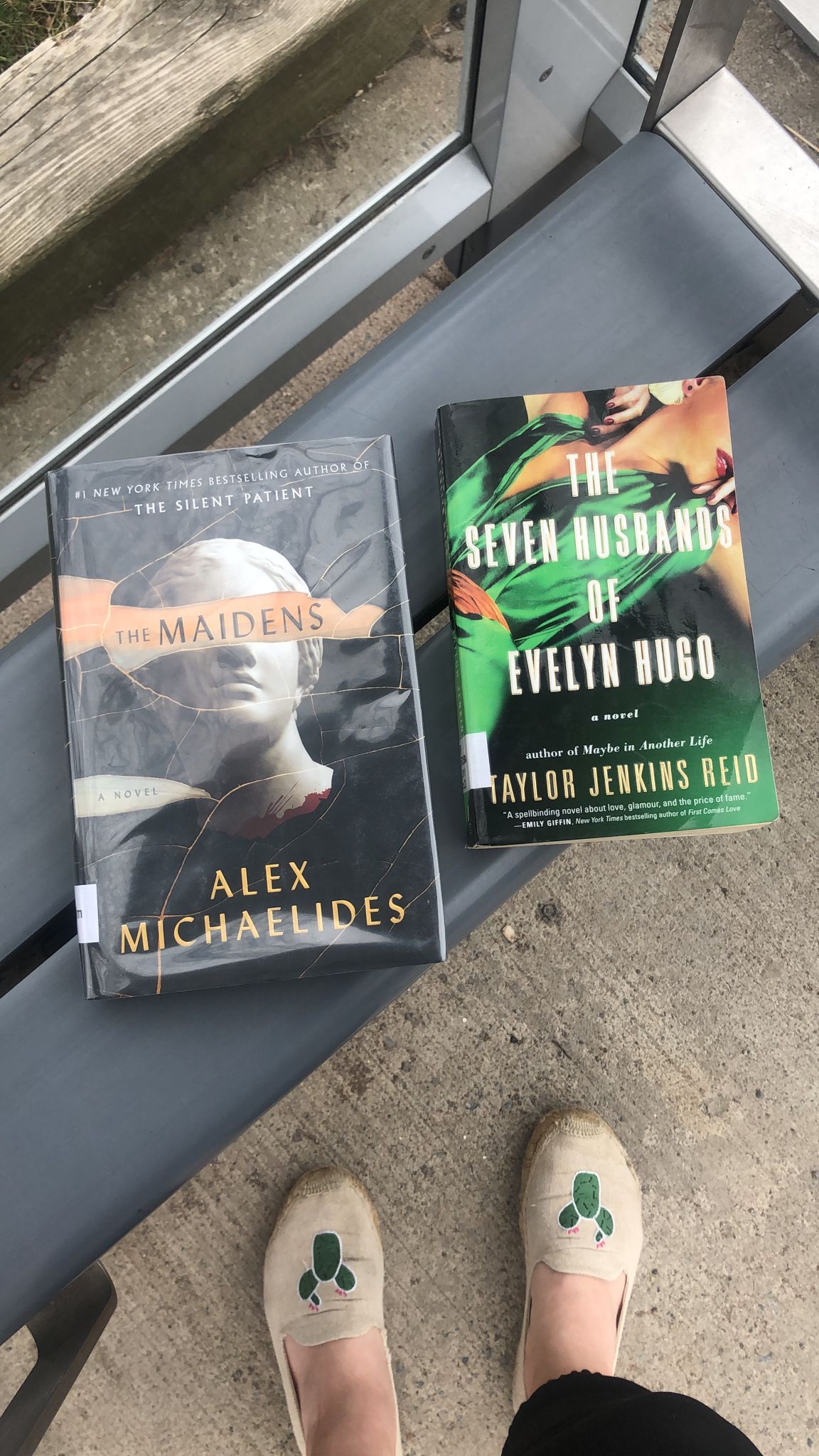
The Maidens
The Maidens - Thriller Book

When the Most Beautiful Places Hide the Darkest Secrets
There is something deeply unsettling about beauty. Manicured lawns. Gothic spires. Ancient stone courtyards draped in centuries of prestige. The kind of place that makes you feel like history itself is watching you and not always kindly.
That is Cambridge. And that is The Maidens.
From Alex Michaelides, the author who made the world stop breathing with The Silent Patient, comes a novel that weaponizes atmosphere. Michaelides chose Cambridge because he studied there and had always wanted to write about it an incredibly beautiful place, but also mysterious and secretive. He didn’t just research it from afar. He would stay in Cambridge for five days at a time, following his characters around the city, going to the same places at the same hours Mariana would — sitting alone at the Eagle pub at nine o’clock, notebook in hand, absorbing every sound and smell. That obsessive attention to place bleeds into every page.
The story centers on Mariana Andros a grieving widow, a group therapist, a woman still learning to breathe after loss. When her niece calls from Cambridge about a murdered friend, Mariana doesn’t go as an investigator. She goes as someone who cannot bear to sit still with her grief any longer. What she finds is a world of locked doors and whispered rituals: a charismatic professor of Greek tragedy named Edward Fosca, a devoted circle of female students he calls his Maidens, and a killer who seems to move like fog through the ancient corridors present everywhere, visible nowhere.
The fictional St. Christopher’s College where the story unfolds is based on Trinity College, one of Michaelides’ favourite places on earth which explains why the setting doesn’t just serve as backdrop but functions almost as a character itself. Brooding, layered, beautiful in a way that makes your skin prickle.
What The Maidens does brilliantly is remind you that the most dangerous people are often the ones you trust the most. The ones who know exactly how love makes you blind. The twist, when it arrives, doesn’t just surprise you. It rearranges everything you thought you understood about the story you were reading.
Described as “languidly-paced, dark, and brooding,” the novel uses its campus setting to build a mesmerizing tale of misgivings, misdirection, and Greek mythology one that asks uncomfortable questions about obsession, grief, and the stories we tell ourselves about the people we love.
Is it perfect? No. Some readers find the red herrings a little too plentiful, and Mariana’s obsessive certainty about Fosca’s guilt can test your patience. But the atmosphere is intoxicating, the mythology is genuinely woven into the fabric of the plot rather than bolted on, and that ending will stay with you long after you close the book.
Combining Greek mythology with propulsive suspense, The Maidens is the kind of thriller best read on a grey afternoon when the light is fading early and the windows are fogging up. Trust no one. And definitely trust your instincts less than you think.
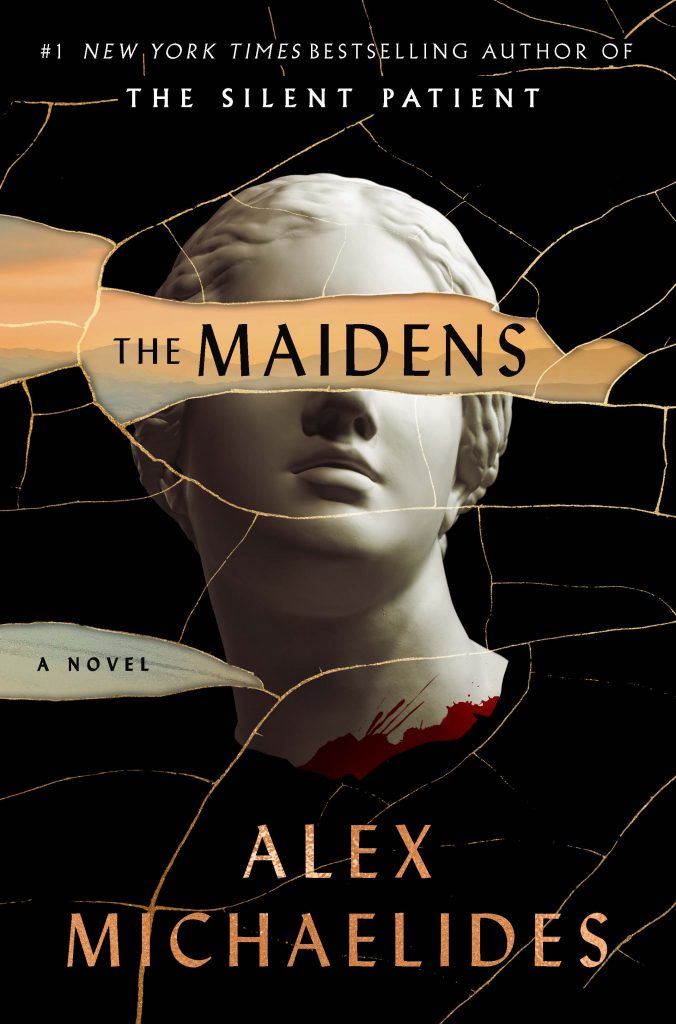
Edward Fosca is a murderer. Of this Mariana is certain. But Fosca is untouchable. A handsome and charismatic Greek Tragedy professor at Cambridge University, Fosca is adored by staff and students alike—particularly by the members of a secret society of female students known as The Maidens.
Mariana Andros is a brilliant but troubled group therapist who becomes fixated on The Maidens when one member, a friend of Mariana’s niece Zoe, is found murdered in Cambridge.
Mariana, who was once herself a student at the university, quickly suspects that behind the idyllic beauty of the spires and turrets, and beneath the ancient traditions, lies something sinister. And she becomes convinced that, despite his alibi, Edward Fosca is guilty of the murder. But why would the professor target one of his students? And why does he keep returning to the rites of Persephone, the maiden, and her journey to the underworld?
When another body is found, Mariana’s obsession with proving Fosca’s guilt spirals out of control, threatening to destroy her credibility as well as her closest relationships. But Mariana is determined to stop this killer, even if it costs her everything—including her own life.
The Maidens Summary
The Maidens is a third-person narrative told from the perspective of Mariana Andros, a 36-year-old widow and group therapist. The novel, divided into six parts, follows Mariana’s journey to Cambridge to investigate the murder of her niece Zoe’s friend, Tara. The story is interspersed with first-person narratives from the killer, who is revealed at the end to be Mariana’s husband, Sebastian.
The Investigation Begins
The novel opens with Mariana struggling with the trauma of her husband Sebastian’s death. She receives a call from her niece Zoe about the murder of her friend Tara at Cambridge University. Mariana, who is already emotionally fragile, travels to Cambridge and meets Zoe and an old classmate, Julian Ashcroft. She is introduced to Edward Fosca, a charismatic professor with a devoted following of female students known as “the Maidens,” of which Tara was a member. Mariana becomes convinced that Edward is the killer.
Escalating Tensions and a Web of Secrets
As the investigation deepens in Part 2, Mariana discovers that she has been idealizing Zoe, who is revealed to be a student of Edward’s and capable of being rude. Mariana’s emotional state worsens as another Maiden, Veronica, is found dead. Unsettled by Edward’s attempts to seduce her, Mariana returns to London in Part 4 to seek guidance from her own therapist and supervisor. They express concern about her emotional well-being, suggesting she’s hiding something from herself, but Mariana dismisses their advice. Another Maiden, Serena, is found murdered, and Mariana’s obsession with the case intensifies.
The Shocking Truth
The final parts of the novel move quickly as Mariana confronts Zoe. Zoe confesses that Edward sexually exploited her during a botched initiation. She also reveals that a porter, Morris, was blackmailing Edward for sleeping with his students. In a climactic scene in the woods, Zoe reveals the shocking truth: she was having an affair with Mariana’s husband, Sebastian, and together they had planned to kill Mariana. Zoe attacks Mariana with a knife, but a character named Fred arrives, distracting Zoe and getting critically injured in the process. Mariana calls the police, and Zoe is arrested.
The epilogue reveals that Zoe is declared unfit for trial. The novel ends on a hopeful but ambiguous note, with Mariana, having started therapy herself, agreeing to visit Zoe in her room for the sake of both their healing processes. The final sentence shows Mariana opening the door, ready to face her niece and their shared trauma.
About the author
Alex Michaelides was born and raised in Cyprus. He has an M.A. in English Literature from Trinity College, Cambridge University, and an M.A. in Screenwriting from the American Film Institute in Los Angeles. The Silent Patient was his first novel. It spent more than a year on the New York Times bestseller list and sold in a record-breaking fifty countries. He lives in London.
He is NOT a psychologist.
Get this book here: The Maidens
Kindle version: The Maidens kindle
Visit Alex’s Website:

Character Analysis
Mariana Andros
Mariana is the protagonist and narrator, a 36-year-old group therapist and widow. Raised by a domineering father after her mother’s death, she grew up shy and isolated. As an adult, she has an unhealthy dependence on books, using them to escape from her problems rather than face them. Mariana’s narrative perspective is narrow and biased; she interprets the world and others’ lives through the lens of her own past traumas, particularly her relationship with her father. She ignores sound advice from her friends and mentors, which ultimately leads her to a dangerous confrontation with the truth. Only when her life is at risk does she begin to face her past and start the long road to healing.
Zoe
Zoe is Mariana’s orphaned niece, a literature student at Cambridge. On the surface, she appears to be a well-adjusted young woman who has overcome childhood trauma. Mariana idealizes Zoe and commends her for her academic success. However, the narrative repeatedly hints at a darker side to Zoe’s character. She is secretive, gives conflicting accounts of events, and is shown to be more manipulative than Mariana realizes. The shocking twist is that Zoe and Mariana’s dead husband, Sebastian, had a secret affair and were plotting the murders together. Zoe’s actions were driven by a desire to honor Sebastian after his untimely death. The novel reveals that Zoe has not healed from her trauma, as she is later declared unfit to stand trial. Ironically, her name, Zoe, means “life” in Greek.
Sebastian
Sebastian is Mariana’s husband, who is already dead at the beginning of the novel. His story is told through interspersed first-person narratives, which reveal that he is a killer. The reader initially assumes he is the murderer of the Maidens, but it is later revealed that he murdered Mariana’s father. Sebastian’s cruelty and violence are shown to be a product of severe childhood abuse, locking him in a cycle of trauma. He is a key figure in the novel’s central mystery, as his manipulation of Zoe and her subsequent actions drive the plot.
Edward Fosca
Edward is a charismatic classics professor and the prime suspect for most of the novel. He is intelligent and charming, with a loyal following of female students he calls “the Maidens,” whom he has affairs with. His predatory behavior and history of childhood abuse are presented as evidence of his guilt. However, Edward’s true role is that of a red herring. While he is far from an innocent man and faces consequences for his actions, he is not the murderer.
Fred
Fred is a mathematics doctoral student who meets Mariana on the train. He is also dealing with personal loss, which fuels his work on parallel universes. Fred’s immediate and awkward infatuation with Mariana makes her suspicious of him, leading her to believe he could be the killer. However, Fred is a red herring. He is ultimately a kind-hearted character who saves Mariana’s life. The novel’s conclusion suggests that Fred and Mariana may eventually form a romantic relationship, hinting at a new beginning for both of them.
Drink Pairings 🍹

For the Cambridge setting: A classic G&T (Gin and Tonic) is a perfect choice. It’s a nod to a traditional British drink often associated with university life and a refreshing way to accompany the novel’s tense atmosphere. revelations.

For the mysterious plot: A Blood Orange Martini offers a blend of elegance and a slightly sinister feel, mirroring the duality of the characters. Its deep color is a nod to the book’s darker themes and the murders that drive the plot.

For the Greek connection: A glass of Ouzo or a Greek white wine like Assyrtiko would be a great way to honor Mariana’s heritage and her tragic past in Greece with her husband.
For the chilling atmosphere: A Hot Toddy is a perfect choice for a cozy night in as you read this suspenseful book. Its warmth can provide a comforting contrast to the novel’s chilling

🍷 Drink Pairings for The Maidens
English Ale — The Cambridge Local Mariana sits alone at the Eagle pub, notebook out, watching strangers. Michaelides himself did exactly this while writing the book. A proper cask ale slightly bitter, earthy, with centuries of pub history behind it, is the drink of that scene. Order a pint and sit somewhere with your back to the wall.
Pomegranate Gin & Tonic — Persephone’s Offering The entire novel is steeped in the myth of Persephone, goddess of the underworld, lured below with pomegranate seeds. A pomegranate gin and tonic deep ruby red, bittersweet, deceptively pretty is the cocktail of this book. Beautiful. Dangerous. Impossible to put down.
Chamomile Tea with Honey — The Therapist’s Office Mariana’s London life, before everything unravels, is one of careful routines and professional calm. A warm chamomile tea is what that version of her drinks soothing on the surface, with a faint undercurrent of something she’s still working through.
Chilled Retsina — The Greek Shadow Sebastian haunts this novel from beyond the grave, and he always brings Greece with him. Retsina the sharp, resinous Greek white wine that tastes exactly like memory, is the drink for the chapters that blur past and present together.
Dry Martini — Fosca’s Table Cold, precise, dangerously smooth. Edward Fosca is the kind of man who would order one without looking at the menu. It’s also the drink you want in hand during the final chapters, because your nerves will need it.
Red Wine, Unopened — For the Twist Pour it. Set it aside. Save it for the moment the truth lands. Then drink the whole glass in one go, stare at the wall, and think about everything you missed.
Fun Facts ✨
Academic Inspiration: Author Alex Michaelides drew heavily from his own experience studying at Cambridge University for the novel’s setting and atmosphere. The descriptions of the college grounds and academic life are based on his time there.
Theatrical Twist: Michaelides has a background as a screenwriter, and this influence is evident in the novel’s structure. The six-part division and the use of a dramatic prologue and epilogue are reminiscent of a play’s structure.
Psychological Expertise: The novel’s protagonist, Mariana, is a group therapist, a detail Michaelides included to explore themes of trauma, guilt, and the complexity of the human mind. The book delves into how Mariana’s own psychological state influences her investigation.
Greek Mythology: The name of the central group, “the Maidens,” is a direct reference to Greek mythology. In the story of Persephone, the maidens were her companions. The group’s name foreshadows the danger and sinister events that befall them.
A Shared Universe: The Maidens shares a character with Michaelides’ first novel, The Silent Patient. The therapist, Theo Faber, who appears in the epilogue of The Maidens is the narrator of The Silent Patient. This connection creates a shared universe for the author’s work.
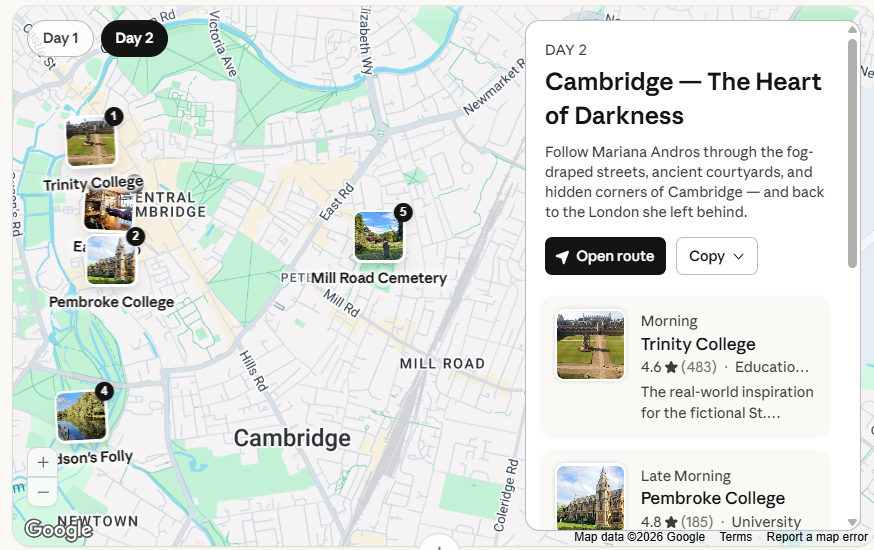
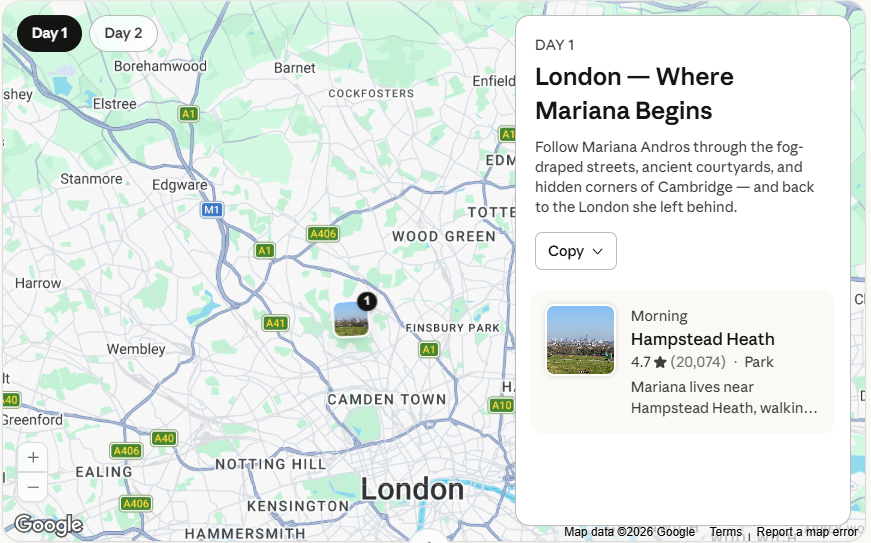
Book trail
Here is a quick guide to each stop on the trail:
Hampstead Heath, London — Mariana’s world before the murder. She walks these wild, fog-soaked paths while carrying her grief over Sebastian. Come on a grey morning and you’ll feel exactly what she feels beautiful surroundings that somehow make the loneliness sharper.
Trinity College, Cambridge — The fictional St. Christopher’s College is based on Trinity College, one of Michaelides’ favourite places on earth. Walk through the Great Court and you are walking through the novel’s most iconic scenes. The porter’s lodge, the chapel, the ancient stone corridors it’s all here. Entry is just £5.
Pembroke College, Cambridge — The connection to Hodson’s Folly runs through this college, as the Folly was originally built by one of Pembroke’s butlers. The grounds are free to visit and carry that same atmosphere of quiet, ancient secrecy that saturates the book.
The Eagle Pub, Cambridge — Michaelides would sit here at nine o’clock like Mariana, alone, with a notebook, absorbing the atmosphere he needed to write her. Order a pint, sit by the window, and you are quite literally sitting where this novel was born.
Hodson’s Folly, Cambridge — A focal point in the novel — four stone columns supporting a sloping roof by the water’s edge, surrounded by woodland and marsh. Michaelides discovered it by chance while zooming in on Google Maps, right where he needed it to be. Free, open all hours, and genuinely eerie at dusk.
Mill Road Cemetery, Cambridge — Mariana follows the porter Morris here and spots him meeting one of the Maidens among the monuments. Overgrown, hauntingly atmospheric, and full of birdsong. One of Cambridge’s most unexpected hidden gems.
Book club questions
Initial Impressions
-
How does The Maidens compare to other novels in the dark academia genre? What elements of murder, mystery, and academic settings does it share or diverge from when you think about books like The Secret History or If We Were Villains?
-
If you have read any of Alex Michaelides’s other works, how does this novel’s writing style and pacing compare? If not, did the book make you want to read his other thrillers?
Personal Reflection and Connection
-
Did you predict any of the plot twists in the novel? Which ones surprised you the most, and do you think a good thriller needs to be surprising to be enjoyable?
-
What is your opinion of exclusive groups like “the Maidens”? Can these kinds of groups ever be healthy, or are they always a sign of a toxic environment?
-
The novel gives a specific portrayal of the campus culture at Cambridge. Does this align with your own knowledge or experience of university life?
-
Mariana is a therapist, not a detective. If you found yourself caught in a mystery you weren’t qualified to solve, what would you do?
-
Many characters engage in “myth-making” about others and their own lives. Do you think this is a helpful or unhelpful practice in real life?
Societal and Cultural Context
-
The novel reveals that the murderer is a woman, which is a departure from typical crime fiction. What commentary do you think this twist offers on the association between violence and masculinity?
-
What does the novel suggest about rape culture and sexual coercion in relationships with a power imbalance? Do you think this portrayal holds true in real-world contexts?
-
How does the novel portray the relationship between mental health and violence? Does it perpetuate stereotypes, or does it offer a more nuanced perspective on mental illness and violent actions?
Literary Analysis
-
How does the use of an older protagonist, the 36-year-old widow Mariana, change the typical tropes of the dark academia genre?
-
The novel is filled with different kinds of “myth-making.” How do these myths—from subconscious beliefs to outright lies—advance the story’s themes, characters, and plot?
-
How does the theme of trauma shape the characters and plot? Think about how both Mariana and the killer are driven by past traumas.
-
The killer’s point-of-view chapters add a different tone to the narrative. What do these sections provide that Mariana’s perspective alone could not?
-
How do key symbols, such as swans and the stained-glass window, function as both symbols and foreshadowing in the novel?
Creative Engagement
-
The novel ends with Mariana entering Zoe’s room. Write a short scene imagining what happens during their encounter.
-
Dark academia is known for its mysterious aesthetic. Create a physical or online collage (using a tool like Pinterest) that captures the unique spirit of this novel’s dark academia setting.
Symbols & Motifs
Swans 🦢
Swans in the novel are a key symbol, representing a mix of prophecy and romance. In Greek mythology, they are sacred to both the goddess of love (Aphrodite) and the god of prophecy (Apollo). This duality is reflected in the narrative. They appear at romantic moments, such as when Mariana recalls falling in love with her husband, Sebastian. However, they also appear at crucial, prophetic moments, foreshadowing danger or a major plot twist, like when Mariana confronts Zoe. At the end, a swan flies away “into the heavens,” symbolizing Mariana’s escape from danger and her journey toward healing.
Stained-Glass Window 🪟
The stained-glass window is a metaphor for Mariana’s distorted perception of her niece, Zoe. When she sees Zoe’s image “fracturing” into pieces through the window, it represents how Mariana has a fragmented and incomplete view of her niece. She sees only what she wants to see—a vulnerable child—and ignores the signs that Zoe is a complex and troubled young woman. This fracturing of an image into smaller parts mirrors the novel’s structure of short, disjointed chapters, which can make it difficult for the reader to get a clear picture of the whole story, replicating Mariana’s confused emotional state.
Time ⏳
Time functions as a key motif, similar to its use in ancient Greek epics. The novel shows that while characters can try to freeze or stop time, the consequences of their actions will eventually catch up. Mariana’s delay in facing the truth about her husband and niece is a prime example; her inaction allows Zoe to carry out a deadly plan. The narrative also slows down at moments of high tension or revelation, like when Mariana learns a new detail about her niece’s secrets. This elongation of time draws attention to the significance of the moment, highlighting a truth that has been hidden for years. This “frozen” time serves as a spotlight, making sure the reader—and Mariana—cannot miss the vital information that is finally being revealed.

You May Also Like

The Amalfi Curse
July 8, 2025
The Things We Cannot Say – Beautiful Story
May 11, 2023