
One Last Rainy Day: The Legacy of a Prince
One Last Rainy Day

One Last Rainy Day
by Kate Stewart
Hello, girls!, this month we are thrilled to dive into the much-anticipated sequel of The Ravenhood Trilogy by the talented author, Kate Stewart. If you thought the first three books were a rollercoaster of emotions, get ready for “One Last Rainy Day,” which promises to be a breathtaking exploration of Dominic’s side of the story.
Book Summary
One Last
Rainy Day
Dark Romance · Vigilante Justice · Found Family
Dominic — Dom — is a man carrying a weight the people around him aren't allowed to see. A founding member of a secret vigilante collective called the Birds, he and his older brother Tobias have spent years targeting the powerful and corrupt: funneling stolen money to shelters, exposing abusers, dismantling criminal networks from the shadows. Their particular obsession is Roman Horner, the powerful figure they hold responsible for the deaths of their parents.
When Roman's daughter, Cecelia, walks into their world — brought home by Dom's closest friend and fellow Bird, Sean — Dom sees her first as a liability, then as a tool, then, despite every wall he has built, as something far more dangerous than either.
What unfolds is equal parts revenge thriller and slow-burn love story. Dom plants spyware on Cecelia's laptop to access Roman's house. He confronts a child abuser at a gas station. He kills a man he's certain was planning a mass shooting at a Fourth of July celebration — and then burns his car, his clothes, and his shoes in the dark. He is not a gentle man. He is a man who has chosen to do terrible things in the name of justice, and who has buried himself so deep in that mission that he no longer believes he deserves peace.
Cecelia breaks that open. So does Sean. The novel's emotional core is a love triangle that refuses to be simple — Cecelia tells Dom that her rainy days are his and her sunny days are Sean's, and both men know they love her in ways that can't coexist forever.
Her rainy days are his. Her sunny days are Sean's. Dom knows this arrangement can't last — but he also knows, finally, that he is not a man built for sunny days.
— The novel's emotional center
When Tobias discovers the love triangle, he exiles Dom and Sean to France for ten months. Dom, forced to choose between Cecelia and his brother, chooses Tobias — and says nothing as she begs him not to go. In France, he realizes his mistake. He escapes and returns home, only to find Tobias and Cecelia together, Tobias having let her believe Dom left by choice. The betrayal cuts in every direction.
The ending is violent and irreversible. When the Miami chapter of the Birds arrives — men who have abandoned vigilantism for paid murder — Dom stands between Cecelia and a bullet that was always coming. He dies in her arms.
Eight years later, Dom's encrypted laptop becomes the final act of a man who knew he might not survive. The evidence inside — of child trafficking networks, corrupt officials, celebrity predators, military complicity — takes two months of news cycles to fully unravel. Dom had been carrying this knowledge alone for years, unwilling to burden anyone else with what he'd seen.
The novel closes not with a chapter but with fragments: voices, weddings, new babies, promises from Tobias, Cecelia's words, a mother's speech. A mosaic of everything Dom died to make possible. The final word is peace.
The People at the
Heart of One Last Rainy Day
Four characters who collide, betray, protect, and grieve one another — each carrying a version of loyalty that the others can't quite match.
King
Dom narrates nearly the entire novel — everything up until the moment his story ends. He is a man with a ferocious sense of right and wrong, and a particular rage toward any adult who harms a child. His parents died when he was young, and for most of his life he and his brother Tobias have been certain that Roman Horner — their parents' wealthy and ruthless employer — arranged their deaths and buried the truth. That certainty has shaped everything: their bond, their choices, the Ravens, and ultimately Dom's fate.
From the very first pages, Dom is sitting on evidence of a human trafficking network reaching into celebrity culture, the military, and halls of power. He can't act — Tobias has ordered him to wait — and he can't share what he knows, because he doesn't trust anyone around him to hold that knowledge without breaking. The isolation this creates is the novel's slow-burning emotional wound. He is surrounded by people who love him, and entirely alone inside his own head.
"She's a living breathing reminder for me that there is good left in the world."
Dom is a multimillionaire who lives simply, drives nothing flashy, and spends his money on strangers who need it — delivered anonymously, no credit taken. He is also a man who has killed someone and burned the evidence. He does not resolve these two facts about himself; he holds them. Cecelia is the first person who makes the holding feel bearable. When his aunt warns him that Cecelia will be his ruin, she's not wrong. But what Dom ultimately gives his life to protect isn't romantic — it's everyone she represents: the proof that goodness still exists and deserves defending.
Horner
Cecelia grew up poor, with a mother battling alcohol addiction and a father who was largely absent from her life. She came back to Triple Falls not out of longing but out of practicality: Roman offered to fund her education and include her in his will in exchange for a year of work. She arrived with a plan. She did not arrive expecting to become the emotional center of three men's lives.
Cecelia is candid and warm in a way that Dom finds disarming and a little frightening. She is comfortable being emotionally open, and she keeps sensing that Dom is locking her out of something essential — because he is. He cannot tell her what he knows about the trafficking ring without destroying her worldview. She still believes the world is fundamentally good. Dom needs her to keep believing that, because he stopped being able to believe it alone.
Cecelia is not simply a passive presence. She walks away from Dom when he demeans her. She sets conditions for their relationship. When Tobias has her drugged and tattooed without her knowledge or consent, her fury is immediate and absolute — she sets fire to the garage. She is sweet, but she is not soft. The combination is precisely what makes her so compelling to the people around her, and what makes her survival, after Dom's death, feel like the point of the whole story.
Sean has been part of Dom's life since childhood. He's the person most attuned to Dom's moods, the one who notices when something is wrong before Dom will admit it. He is empathic to the point where Dom decides, deliberately, not to tell him about the trafficking evidence — because Dom knows Sean would not be able to bear the weight of knowing and doing nothing. It is a form of love. It is also a closed door between two people who otherwise have no secrets.
Sean was with Cecelia first. When Dom also fell for her, Sean was the one who accepted the arrangement without threat or resentment. He saw clearly what Dom kept refusing to admit — that the three of them could work, if Dom would allow it. Sean was never competing. He was just loving two people and hoping one of them would catch up.
Dom's death unmakes Sean. In the immediate aftermath, a man who doesn't like violence presses a gun to another man's throat and tries to crush his windpipe. The grief strips him down to something animal. Months later, he is still going to the grave to convince himself it's real. He names his first child after Dom. It is not a memorial — it is Sean refusing to let the story end.
King
Tobias is Dom's older half-brother and, for most of Dom's life, his north star. He was the one who got out of Triple Falls first, who built something, who became the leader of their Raven branch. Dom idolized him — in the way a boy who lost his parents young and was raised poorly by a struggling aunt tends to idolize the older sibling who made it out. The novel is, in part, the slow erosion of that idolization.
Where Dom wears jeans and refuses credit for his generosity, Tobias wears custom suits and leverages authority. Where Dom's commitment to justice feels visceral and personal, Tobias's feels procedural — he cares about the club's operations more than the suffering that drives them. He keeps Dom waiting on the trafficking evidence without explanation, without timeline, without acknowledgment of what that silence costs. Dom remains loyal until he can't.
Tobias demands total, unquestioning loyalty from every member of the Ravens. Dom and Sean honor that — they choose the club over Cecelia, accept exile, accept consequences. When Tobias is in the same position — forced to choose between the club and a woman — he keeps her. He lets Cecelia believe Dom and Sean abandoned her by choice. He has her drugged. He has her tattooed without consent. Dom may have kept secrets. He never lied. He never took something from Cecelia that wasn't offered. The difference between the brothers is not their capability — it is their character.
Tobias loves Dom. But he does not love him the way Dom loves everyone — without conditions, without limit, and without keeping score.
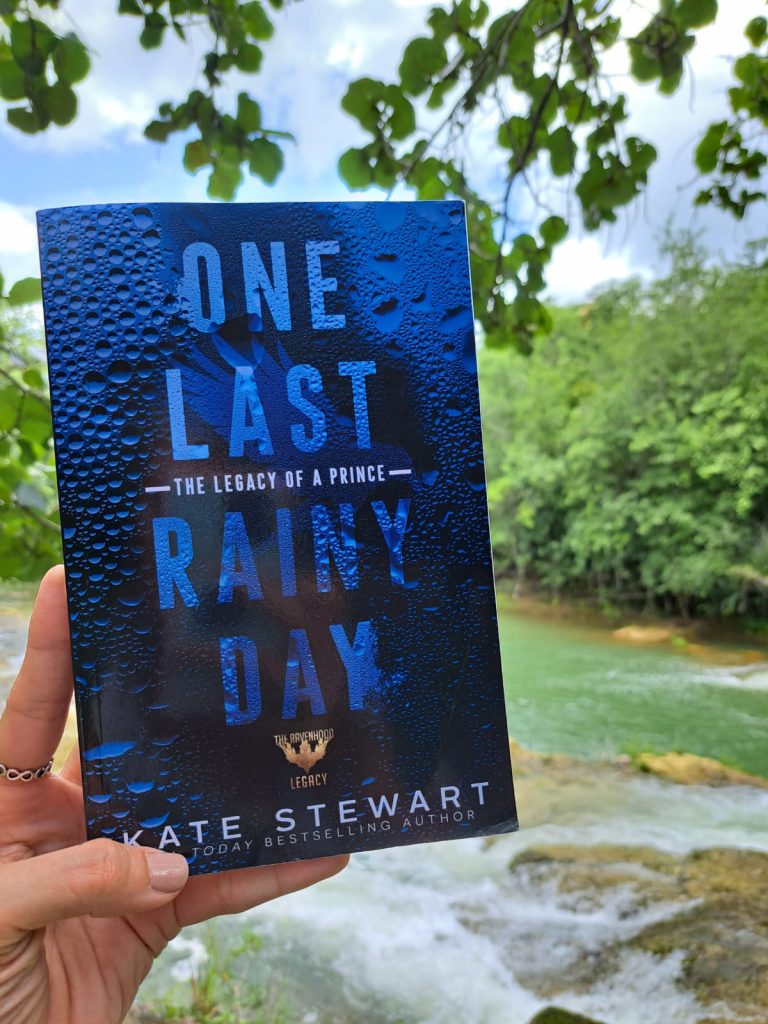

Dominic’s Perspective: Finally, we get to see the world through Dominic’s eyes. His thoughts, fears, and desires will be laid bare, allowing us to understand the man behind the enigmatic and complex character. His love for rainy days and the air of darkness surrounding him left us with burning questions. “One Last Rainy Day” provides the answers we’ve been longing for.
The Power of Love: Love has always been at the core of this trilogy. In “One Last Rainy Day,” expect to witness the strength of love as Dominic confronts his own demons and strives to protect what matters most to him.
Let's grab a Beer:
In honor of Dominic’s French heritage, we’ve curated a selection of different French beers that we think will match perfectly with the book, and of course our upcoming virtual meeting.
À votre santé!
- Desperados: is a beer born in 1995 in Alsace in a brewery that has since been bought by Heineken France. It is a beer oriented towards young people, its tequila aromas, its powerful, subtle, and unique taste has seduced the youth market as expected.
- Kronenbourg 1664 Blanc: A crisp, citrusy wheat beer that mirrors the fleeting beauty of moments in the book.
- Page 24: This beer is brewed in the Saint Germain brewery in Aix Noulette, a small village in the Artois region of Nord-Pas-de-Calais since 2003. Page 24 Blonde is a soft, refreshing, and fruity beer. this beer is also available in Pale Ale, Spring, White, Triple or Amber versions.
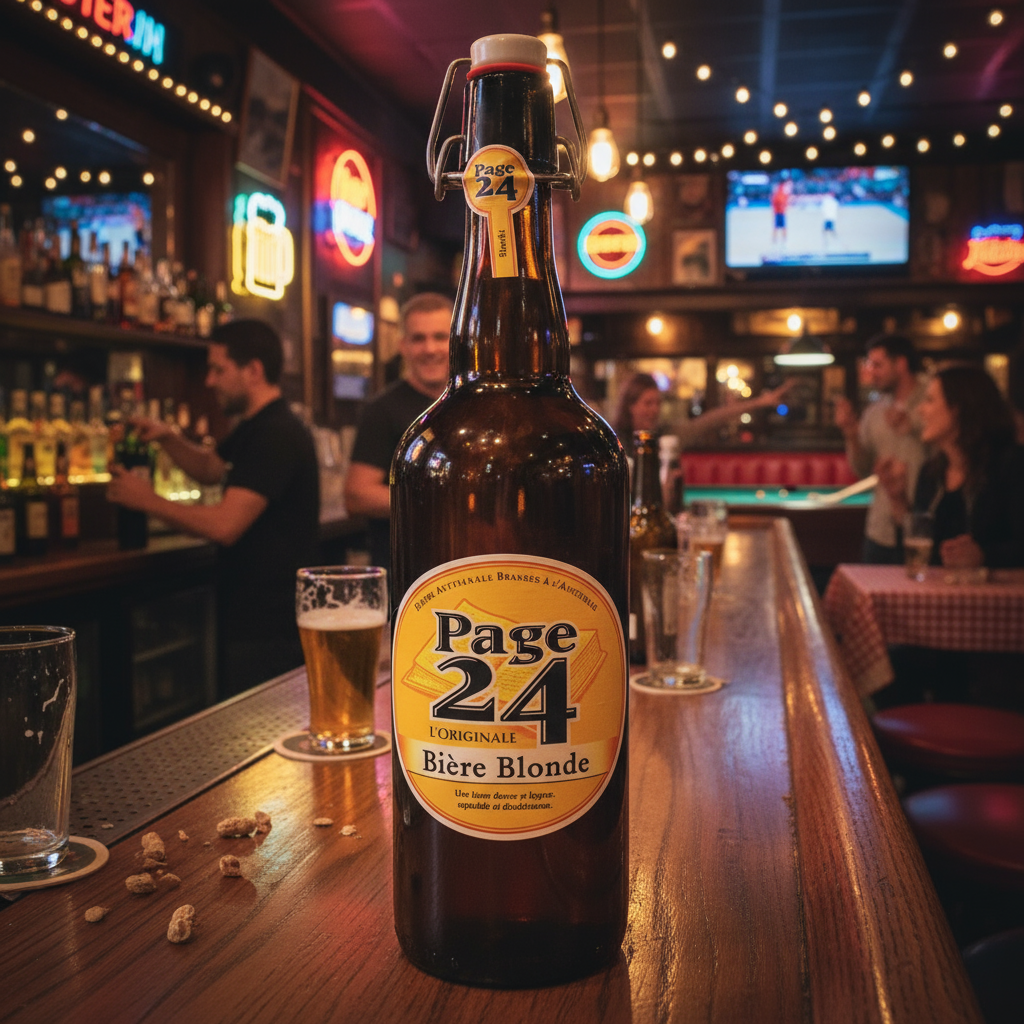
Stormy Days and "Dominic": The Perfect Combo for Craving Cheeseburgers and chicken Wings!


Things worth
knowing about
One Last Rainy Day
After Dom dies, the novel's chapter numbering disappears. The remaining sections are titled by the name of whoever is narrating — Denny, Tyler, Sean. It's a structural choice that quietly signals that Dom was the organizing principle of the entire story. Without him, the usual order collapses. The book itself grieves by changing form.
Dom swears repeatedly, to himself and out loud, that he will not allow himself to fall in love with Cecelia. He knows the relationship has no future. He knows that when she learns the truth, she'll run. He is right about all of it — and he falls anyway. The novel treats this not as weakness but as the one honest thing about him.
Dom's encrypted laptop requires two passwords: the first, Always Brothers, is cracked by Tobias and Tyler within eight years. The second requires Cecelia's fingerprint — meaning Dom built her into his legacy. The evidence inside takes down a trafficking network spanning celebrities and military officials. Dom left the whole world a gift, and made sure only she could open it.
The entire architecture of Dom and Tobias's lives — the club, the years of vigilantism, the obsession with Roman Horner, the reason Cecelia was brought into their orbit at all — is built on a belief that Roman is responsible for their parents' deaths. He isn't. Tobias reveals this in the chaos of the final confrontation, seconds before Dom is shot.
The club's vigilantism isn't just violence — it's redistribution. Stolen goods are converted to cash and donated to women's shelters; checks are delivered personally to struggling families. Cecelia witnesses one of these deliveries and cries. It's the moment she tells Dom he deserves to know the good he's doing — and possibly the moment she becomes irretrievably his.
Dom's Aunt Delphine — the woman who raised him with a hard hand and is now dying of cancer — tells him early in the novel that "Cecelia will be your ruin." She is not wrong, exactly. But the novel complicates what ruin means: Dom dies because of Cecelia, and the world is better for it. Delphine also apologizes before she dies — for everything.
Dom spots bruising on an 11-year-old boy named Zach at his father Tim's gas station. He attacks Tim, threatens him, gives Zach cash, and tells Tim not to touch it. Eight years later, Tyler has adopted Zach, who has just gotten his own tattoo — the mark of a Bird. Dom, who never had children, shaped this boy's entire life in one gas station stop.
Instead of a traditional closing chapter, the book ends with a collage: fragments of speech, references to weddings and new babies, Tobias's promises, Cecelia's voice, a mother's words. It does not tell you what happened — it shows you the world Dom made possible. The final word is peace. He never got to keep it. Everyone else does.
The Ravenhood: Book Club Discussion Guide
Initial Impressions & Heartbreak
Gather the group’s raw reactions to finally seeing the world through Dom’s eyes.
The Man Behind the Myth: How did seeing the world through Dominic’s perspective change your view of the events in Flock and Exodus? Did it make him more relatable, or more tragic?
A Different Kind of Dark: For those who read “Dark Romance,” how does the Ravenhood Legacy compare? Looking back at the beginning, would you define what Dom and Cecelia had as “true love,” or was it a product of their circumstances?
Personal Reflections: Vengeance & Vulnerability
Connecting the intense themes of the novel to our own lives.
The Weight of Revenge: Dominic is driven by a need for justice. Have you ever felt a consuming urge to right a wrong done to you? If you acted on it, did it bring peace, or did it come with a “price” you didn’t expect?
The Family Anchor: Dom’s relationship with the Triplets and Tobias is a mix of fierce loyalty and stifling control. Have you ever felt like your family was simultaneously your greatest support and your biggest obstacle?
The Power of Being Seen: A major theme is the healing power of being accepted exactly as you are. Have you ever had a “safe person” like that? Is that a role you find yourself playing for others?
Heavy Secrets: Dom often carries the burden of the “elite’s” darkness alone to protect others. Have you ever kept a painful truth to yourself just to spare someone else the burden of knowing? How did that isolation affect you?
The World of the Ravenhood
Discussing the “Vigilante” justice and the reality of the American Dream.
Chasing the Dream: The book paints a gritty, often pessimistic picture of the American Dream. Do you think the Ravenhood’s cynical view is a fair reflection of our current reality, or is it too extreme?
Vigilante Justice: The Ravenhood operates outside the law to enforce their own brand of justice. In a perfect world, would an organization like the brothers’ be a benefit to society, or would the lack of oversight inevitably lead to more chaos?
Literary Deep-Dive
Analyzing the structure, the “Birds,” and the ending.
The Shift in Perspective: The book ends by dropping numbered chapters and introducing voices from “other birds.” How did this stylistic choice impact your reading experience? Did it provide closure or leave you wanting more?
The Final Chapter: That final chapter titled “Dom” is hauntingly sparse. Do you interpret it as a reflection of his past, the moment of his transition, or a glimpse into the “after”?
The Tobias King Conflict: Let’s talk about Tobias. Is he a flawed man doing his best, or a hypocrite for his treatment of Dom and Sean compared to his own choices? Can we truly call him a “good guy” when he prioritized the mission over stopping the immediate horror of human trafficking?
Creative Session
Bringing the characters to life beyond the page.
The Dream Cast: If The Ravenhood was adapted into a gritty limited series, who is your “forever Dom”? Who rounds out the cast for Cecelia, Tobias, Sean, and the rest of the brotherhood?
The Soundtrack of the Rain: Music is a huge part of the series’ atmosphere. Which song perfectly captures Dom’s mindset before meeting Cecelia? Which track represents the “Storm” of their relationship?
Primary location — Triple Falls, North Carolina. This is where the story is centered. It’s where the Ravens’ townhouse is, where Roman Horner’s house and pool are, where Cecelia works at Roman’s factory, and where Delphine lives. Cecelia’s character description specifically notes she “grew up outside Triple Falls” and returned when Roman made his offer — suggesting it’s a small enough town that leaving and coming back carries weight.
Secondary location — France. When Tobias exiles Dom and Sean for ten months, they’re sent to France, where the largest Raven chapter (built by a man named Antoine) operates. Dom and Sean have chaperones there named Julien and Albert. They eventually escape and fly home.
Brief mentions — Oakland or somewhere on the West Coast is implied as Laney’s world in the summary, though that appears to be a confusion from the Book Haters’ notes mixed into our conversation. For One Last Rainy Day specifically, the only clearly named real-world place outside Triple Falls is France.
One thing worth noting: Triple Falls, North Carolina appears to be fictional. There is a Triple Falls waterfall in DuPont State Forest in North Carolina, but it’s not a town. The author likely borrowed the name to evoke a specific rural, Southern atmosphere — somewhere with old money, tight social hierarchies, and the kind of powerful local figures who can make things disappear.


None of This is True
You May Also Like

The Heiress
October 9, 2024
The Fragile Threads of Power
November 20, 2024