
The Lost Heiress
The Lost Heiress

The Lost Heiress
by Elizabeth Klehfoth
Plot summary
The novel opens with a haunting present-day discovery: construction workers digging at the foundations of Cliffhaven, a vast, cliff-perched estate on California’s Central Coast, unearth the skeletal remains of Saoirse Towers, a wealthy young heiress who vanished on the night of her eighteenth birthday party in September 1982. Nearly forty years of a “missing persons” case are overturned in an instant. Then comes the shock twist: a second set of bones is found alongside her.
The story unfolds on two timelines. In the summer of 1982, three months before the party, a young woman named Elena Castillo, posing under the stolen identity “Ana Rojas”, arrives at Cliffhaven as a live-in companion to Saoirse. Her real mission: to find out what happened to her beloved cousin Rosie, who drowned under murky circumstances when she joined the Towers brothers on a sailing trip four years earlier. Elena navigates the rigid hierarchy of the estate, the watchful hostility of the formidable housekeeper Florence Talbot, and her own growing, unwanted feelings for Ransom Towers — the polished, cold congressman who is Saoirse’s older brother.
Saoirse herself is fiercely magnetic: witty, principled, tempestuous. She has been confined to Cliffhaven against her will due to a supposed heart condition (long QT syndrome), but she suspects the diagnosis is more control than care. Her eighteenth birthday party looms as her liberation: once she comes of age, she can access her fortune, divest her majority share from William Bass’s food conglomerate Bass Corp, and reclaim her autonomy. Her godfather Bass, charming, ruthless, and tangled in a decades-long affair with her now-deceased mother, has far too much to lose.
As the past and present timelines converge, Detective Church investigates the double murder while Elena, now Ransom’s wife of decades, faces the reopened case. The novel’s emotional core is its shattering revelations about loyalty, family secrets, and the violence that wealth can so effectively erase.
Florence Talbot’s backstory, stretching from the 1930s to the present, reveals her as the novel’s secret moral center: a woman who has quietly witnessed every sin committed inside Cliffhaven and paid the price for a lifetime of silence. The identity of the second body ultimately turns the entire story on its head.
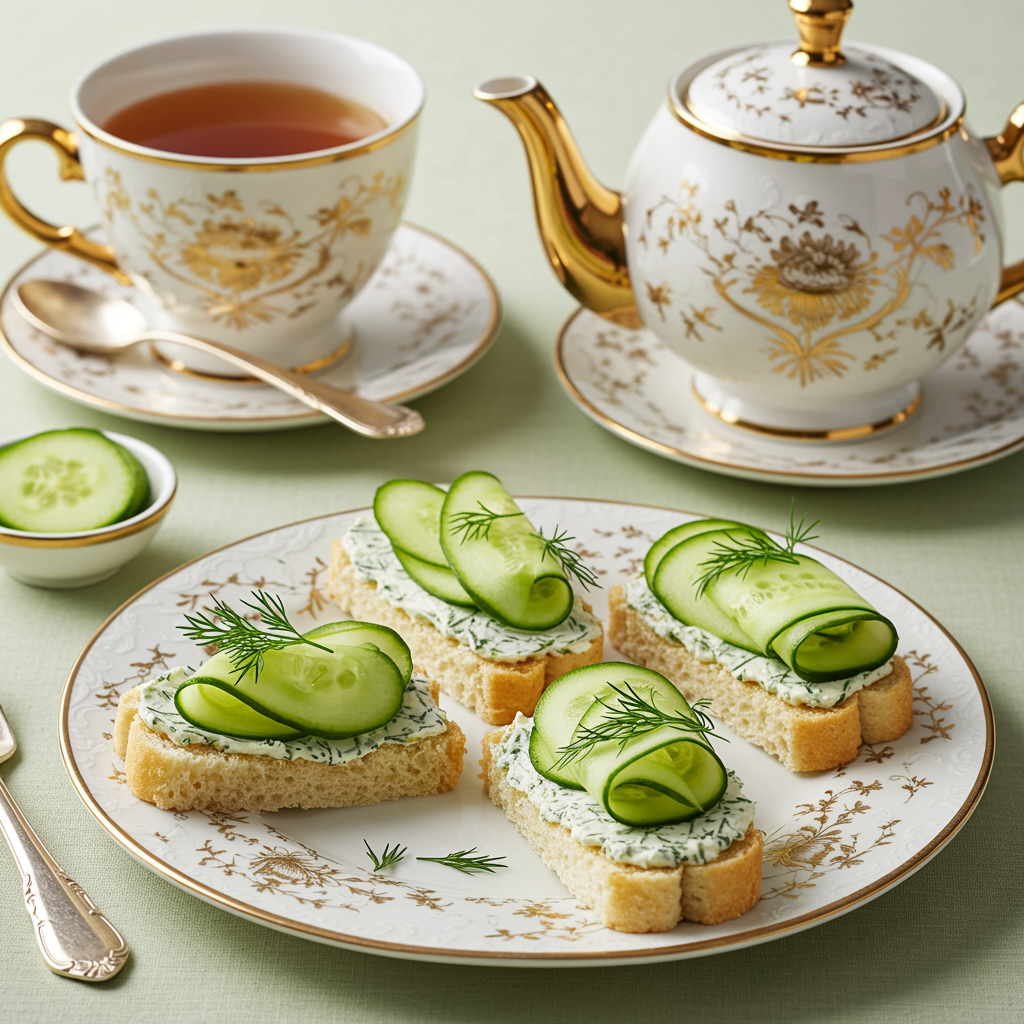
Drinks & Food to pair




Towers Family Tree
Towers
Towers
Towers
Towers
Towers
Towers
Towers
Towers
Towers
Towers
Towers
Towers
Towers
Sinclair
Towers
Gordon
Towers
Smith
Towers
Towers
Gordon
("Ana Rojas")
Characters
Fashion Deep-Dive
Dressing the Characters
The Lost Heiress · Elizabeth Klehfoth
From Dior's New Look at Cliffhaven to a JCPenney khaki skirt at The Peninsula — every garment in the novel, catalogued.
Doris Oppenheimer Towers
The original fashion icon of Cliffhaven · Paris twice yearly
Doris was a fervent champion of Dior's "New Look" — the silhouette that revolutionised women's fashion after World War II. Where wartime fashion had enforced boxy, fabric-rationed practicality, the New Look brought exaggerated femininity back: tightly boned corsets that cinched the waist to an extreme, and full sweeping skirts that fell below the knee. "A woman should look like a woman," Doris declared, scorning the shapeless shift dresses of the preceding decades.
Twice each year — spring and autumn — she made the transatlantic journey to Paris solely to order her seasonal wardrobe. At Christian Dior on Avenue Montaigne she chose from his theatrical, architectural creations. At Balenciaga she found the Spanish master's more austere, highly structured interpretations. At Givenchy she found witty, youthful refinement that bridged art and wearability.
"She wore bold colors — poppy red, canary yellow, bright persimmon — in delicious fabrics: lace and taffeta, twill and tulle. She always wore gloves and a silk scarf in her hair."
Saoirse Towers
Dress as defiance · The Lost Heiress
A smart white jumper that skimmed her slender figure and showed off her deep tan, long dark hair falling loosely around her shoulders. "She was quite possibly the most beautiful person Ana had ever seen, outside of the movies."
A fine restaurant refused Saoirse entry for wearing trousers. Without blinking, she stripped them off in the lobby and marched to a table in her heels and blazer alone, bare legs on full display. The maître d', red-faced and outmanoeuvred, simply handed her a menu. Dress as battleground.
A sleeveless silver silk concoction with a plunging neckline, a fitted waist, and a flowing skirt. Jacqueline declares she looks "like a glimmer of moonshine" and "a streak of starlight." Ransom objects to the neckline. Saoirse invokes Bianca Jagger. Jacqueline invokes Jackie Onassis — who also wore Halston. Ransom reluctantly capitulates.
"Now, this is more like it," Saoirse said, glowing.
Pointed-toe pumps embellished with a crystal buckle — the exact pair she had seen photographed on Bianca Jagger in Vogue and begged her father to get. The discovery of her family's darkest secret means she resolves never to wear them. The most perfect shoes she had ever seen, now unwearable. Objects of thwarted girlhood.
William Bass gifted Saoirse a navy blue Hermès bag in crocodile skin — just like the one Grace Kelly owned. After becoming a committed animal rights advocate, she can no longer use a bag made from a killed animal — but cannot bring herself to get rid of it either. It sits on the shelf in her closet like a museum piece. Bass chose the bag not simply to delight Saoirse, but to bind her to an identity he curated.
Ana Rojas / Elena Castillo
Dressed to survive · The novel's sharpest fashion observer
For the most consequential interview of her life, Elena arrives in a JCPenney khaki skirt and plain button-down shirt — the clothes she wears to church on Sundays with her grandmother. She notes immediately that even the tables are better dressed than she is.
"As soon as Ana walked in, she immediately felt underdressed in her JCPenney khaki skirt and plain button-down shirt — the clothes she wore to church on Sunday with her grandmother, the nicest things she owned."
Mrs. Talbot gives her a once-over from flyaway braids to her yellowing Chuck Taylors — the same pair she wore on the drive — and delivers a disapproving look that needs no words. The canvas sneakers against the marble floors of Cliffhaven is the whole novel's class dynamic in a single visual.
A strapless crepe gown in deep ink blue, almost teal, cut straight across the bodice and falling in a column to the floor. One side of the skirt is draped and pinned to the natural waistline; the other has a thigh-high slit. The dress costs over a thousand dollars — Elena's entire summer wages. Ransom buys it without asking, charges it to his account.
In it, Elena is transformed. The teal-blue draws out the green of her eyes and deepens the olive tone of her skin. Ransom stares at her in the mirror and says, in a voice slightly hoarse, that it has "impeccable craftsmanship" — the most emotionally revealing understatement he manages all summer.
"She had never felt anything so luxurious and smooth against her skin before, and when the clasps were done, it fit her body just so."
"I'm more of a JCPenney girl."
When Ransom asks if Elena is going to try on anything at Giorgio Beverly Hills — a store where Elizabeth Taylor and Princess Grace of Monaco shop — Elena delivers this line without flinching. It is not self-deprecation. It is not apology. It is a clean statement of identity in the face of one of the most expensive boutiques in America. Ransom immediately responds by buying her the thousand-dollar gown. He cannot hear "JCPenney" without trying to correct it.
Astrid Towers
Fashion as the site of war — with her mother, and then her husband
While the house should have been in mourning, Astrid parades through Cliffhaven in colorful couture dresses with full skirts and impossibly small waists, plus a pair of cigarette pants and a knee-length pencil skirt that hugged her thighs so tightly Florence wondered how she could walk.
Scarlet Towers orders the maids to confiscate them — then burns them in her fireplace. "I will not have a daughter of mine dressing like a hussy." Astrid comes to breakfast the next morning with red, swollen eyes to mourn not a person, but a pair of trousers.
After RJ forbids Astrid from attending ballet classes, she greets him the next morning in a blue Chanel scoop-neck tea-length swing dress that brought out her eyes, belted at the waist to emphasise the hourglass figure he said was disappearing.
"The dress was belted at the waist, accentuating the hourglass figure that RJ had claimed was diminishing the night before."
The dress is a studied performance of compliance. Underneath, she is going directly to her dance studio the moment the cab turns the corner.
To explain where she is going, Astrid tells RJ that "Givenchy's fall line just came out" and she plans to call on a friend. He is satisfied — a morning at Givenchy buying expensive clothes is exactly what he wants from his wife. The cab immediately redirects to Notting Hill and the dance studio. The Givenchy visit never happens. The name of a couture house functions here as a social passport — a sentence that translates to: I am behaving as a woman of your class is expected to behave.
The Rodeo Drive Scene
Giorgio Beverly Hills · August 1982 · four dresses, three women, one class collision
The boutique where Elizabeth Taylor and Princess Grace of Monaco shop. Mahogany floors. Racks sparsely populated with singular garments arranged like pieces of art in a gallery. A woman greeted them personally at the front, dressed sharply in a chic black dress with a kerchief tied around her neck, offering champagne.
A strapless Calvin Klein dress, dark as night, with boning in the bodice and a taffeta skirt. Saoirse's verdict: "I feel like Princess Barbie." Too dark, too constrictive. She tugs at the top and dismisses it.
A red floral-lace Valentino with a flowy tulle overlay, high neck, belted at the waist. Jacqueline looks stunning. Ransom calls it "loud and over the top." Jacqueline says "Perfect" and declares she cannot breathe in it but never wants to take it off. She buys it immediately — the novel's most undisguised sensualist about clothes.
A sleeveless silver silk concoction with a plunging neckline, a fitted waist, and a flowing skirt. Saoirse looks like a Greek goddess. "Like a glimmer of moonshine. Like a streak of starlight." Ransom objects to the neckline. After invoking Bianca Jagger and Jackie Onassis, Saoirse wins.
Elena says "I'm more of a JCPenney girl." Ransom turns to the shop attendant and says: "The blue-green Yves Saint Laurent dress in the window would suit her. Put it on my tab." A strapless crepe gown in deep ink blue, almost teal, with a thigh-high slit. "You're a knockout in it," says Alexandra. Ransom stares at her in the mirror and says it has "impeccable craftsmanship" — in a voice that is slightly hoarse.
"She had never felt anything so luxurious and smooth against her skin before."
The Fashion Houses
Who they were in the novel's era — and why it matters
The Class Contrast
Klehfoth uses clothing as a surgical instrument throughout the novel — not as decoration, but as the argument itself.
The narrator notes that "even the tables were dressed nicer than she was." A JCPenney khaki skirt is not a bad skirt. At The Peninsula Beverly Hills in 1982, it is simply invisible — not because it is wrong but because it belongs to a different world entirely. Elena knows this. She is not embarrassed. She is furious.
The problem is not the dress. The problem is that in Ransom's world, the label is the thing, and its absence is its own announcement. When Gabi says "Oh, um, Sears, I think" — the dress ceases to be a garment and becomes a verdict.
Book Trail — Real Locations
Book Club Questions
Trivia & Easter Eggs


Her Last Breath
You May Also Like

The Midnight Feast
September 12, 2024
The London Séance Society
May 11, 2023